
Fiber Optic Ethernet Cable: How It Works and When to Use It
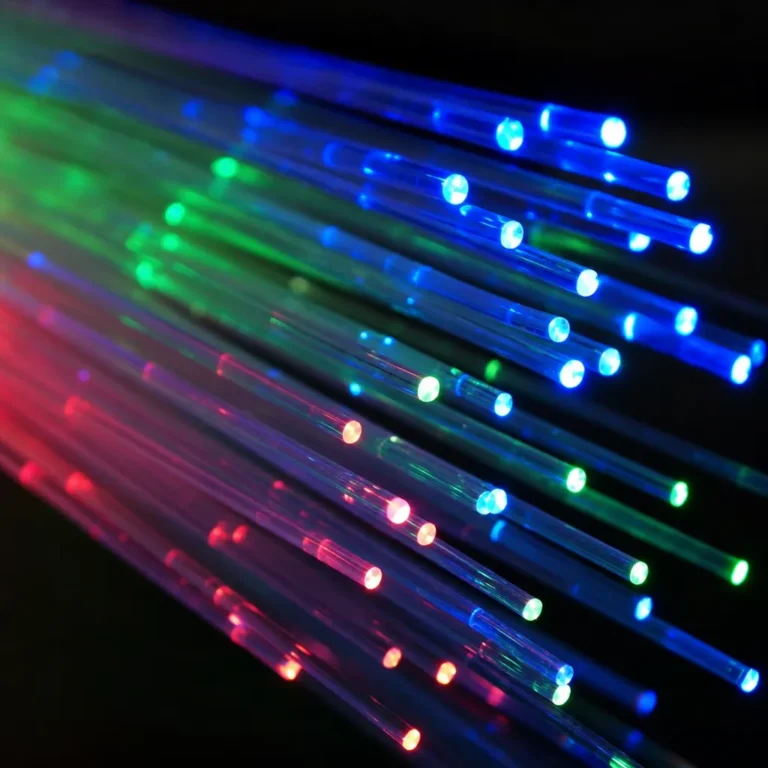
A fiber optic Ethernet cable carries network data as pulses of light instead of electrical signals. That makes fiber ideal for high-speed links, longer cable runs, and locations where electromagnetic interference can affect copper cabling.
In business, data center, and enterprise networks, fiber often connects switches, racks, network rooms, floors, and buildings. The right cable depends on speed, distance, equipment, and network design.
What Is Fiber Optic Ethernet?
Fiber optic Ethernet is Ethernet communication transmitted over optical fiber. Ethernet is the networking technology, while fiber is the physical medium carrying the data.
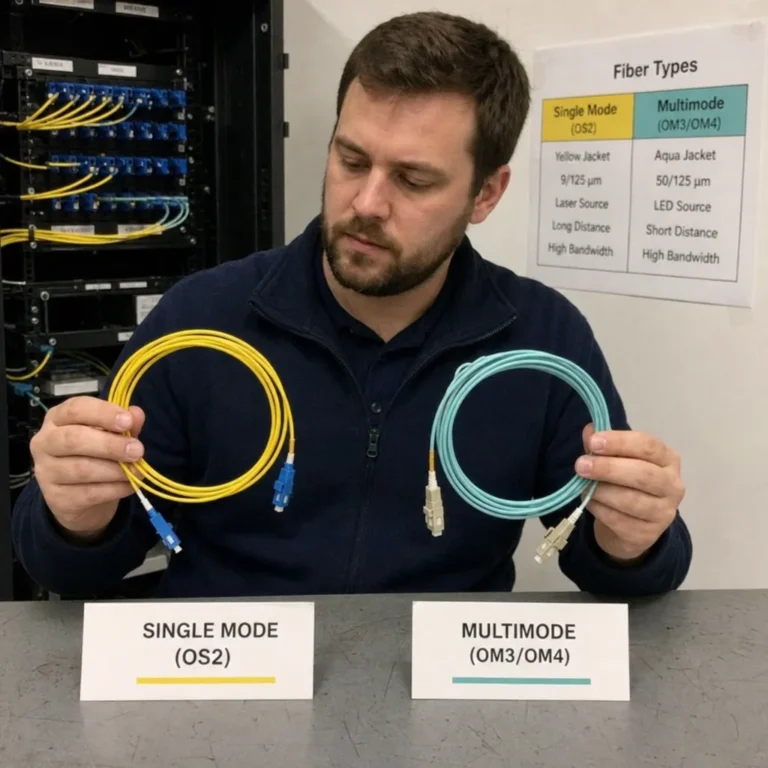
A fiber network cable uses glass fibers to transmit light between compatible devices. Networks may use OM3 or OM4 multimode fiber for shorter high-speed links or OS2 single-mode fiber for longer connections.
Does Ethernet Run Over Fiber?
Yes. Ethernet can run over both copper and fiber.
Switches with optical ports connect through compatible SFP, SFP+, SFP28, QSFP, or similar transceivers. If equipment only has copper Ethernet ports, a media converter can convert the electrical signal into an optical signal.
This is commonly called Ethernet over fiber and allows businesses to extend Ethernet beyond practical copper distances.
Fiber vs Copper Ethernet Cable
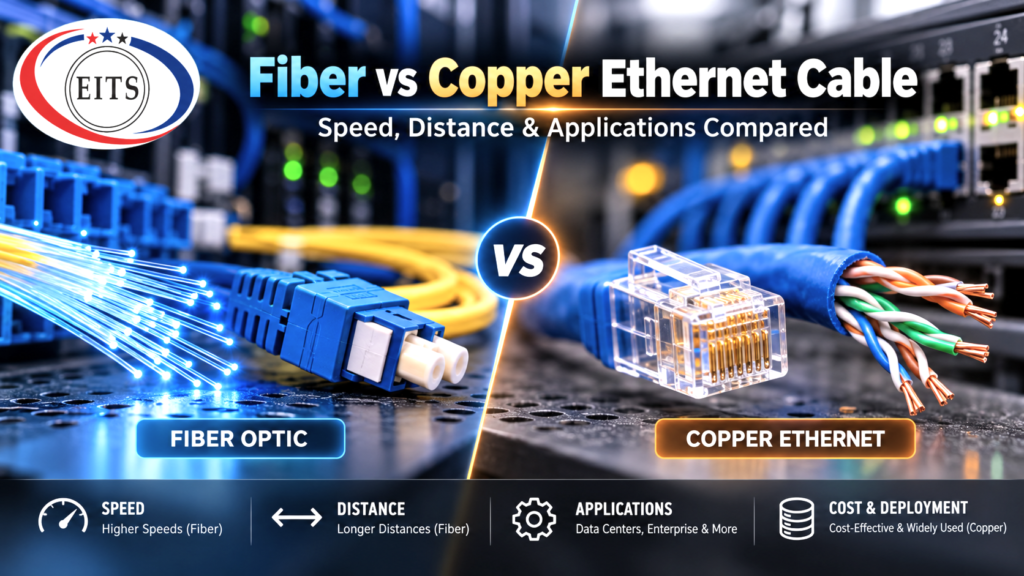
When people search fiber vs Ethernet cable, they usually mean fiber versus copper twisted-pair Ethernet.
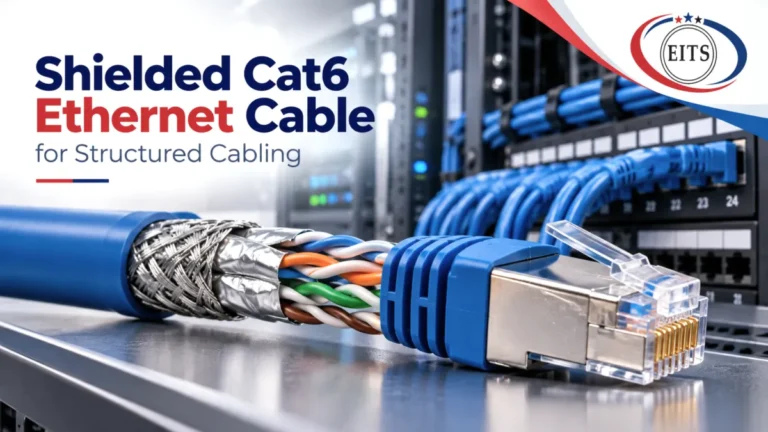
Copper Cat6 and Cat6A work well for desktops, access points, IP phones, cameras, and shorter connections. Copper is also useful where Power over Ethernet is required.
Fiber supports longer distances, high bandwidth, electrical isolation, and strong resistance to electromagnetic interference. It is especially useful for backbones and connections between racks, floors, buildings, or data center zones.
Fiber Optic Ethernet Speed
Fiber can support very high network speeds when paired with the correct optics and equipment. Modern fiber Ethernet links can support 1G, 10G, 25G, 40G, 100G, 400G, and higher rates depending on the network design.
These technologies operate within established IEEE 802.3 Ethernet standards for Ethernet networking.
How Far Can Fiber Ethernet Run?
Distance is one of fiber’s biggest advantages.
Copper Ethernet is mainly designed for shorter building runs. Fiber can extend network connections much farther. Multimode fiber is common inside data centers and enterprise facilities, while OS2 single-mode fiber suits longer backbone, campus, telecom, and building-to-building links.
For compatible single-mode equipment, an OS2 single-mode fiber optic patch cable can connect switches, patch panels, transceivers, and other optical hardware.
Fiber Ethernet and EMI
Fiber does not transmit network data as electrical current, so electromagnetic interference does not affect the optical signal in the same way it affects copper.
This makes a fiber ethernet cable useful around motors, electrical equipment, industrial systems, and other electrically noisy environments.
Fiber Optic Ethernet in Data Centers
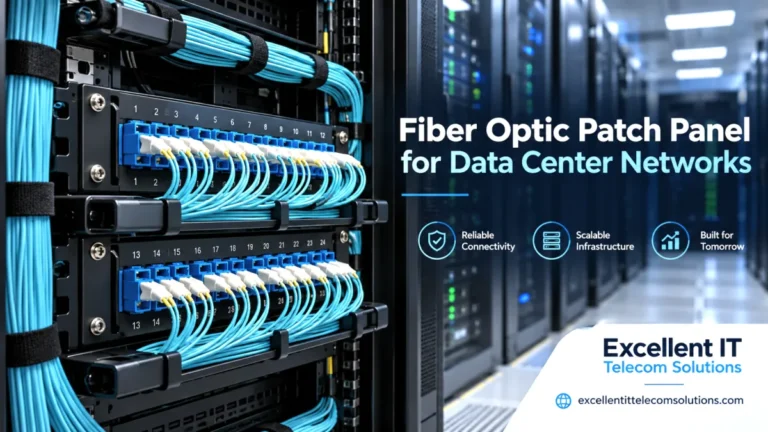
Data centers use fiber for high bandwidth, scalable cabling, and dense connections between switches, servers, storage, and network zones.
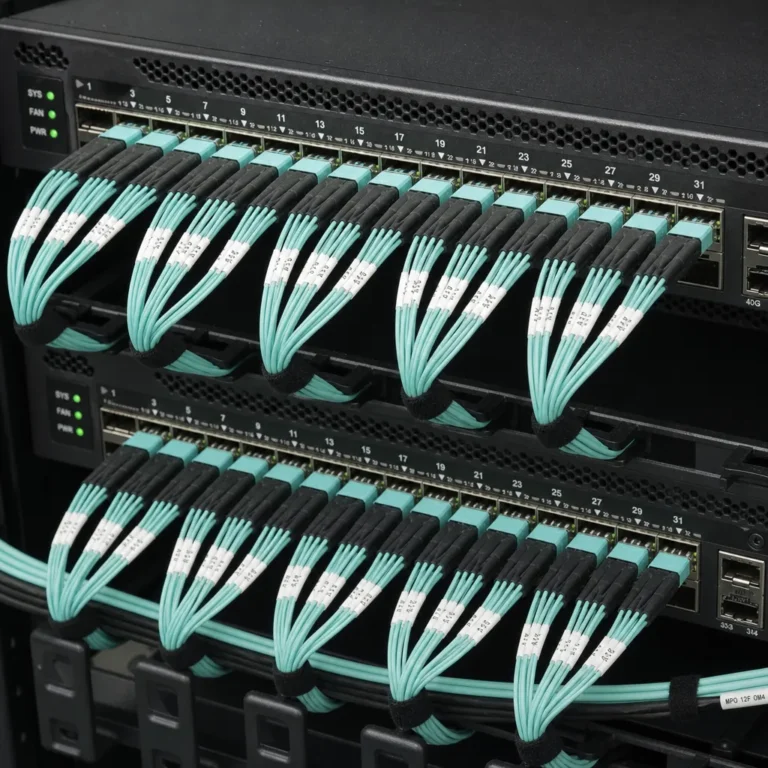
LC connectors are common for duplex links, while MPO/MTP connectors support high-density and parallel-optics systems. OM3 and OM4 are widely used for shorter multimode links, while OS2 supports single-mode applications.
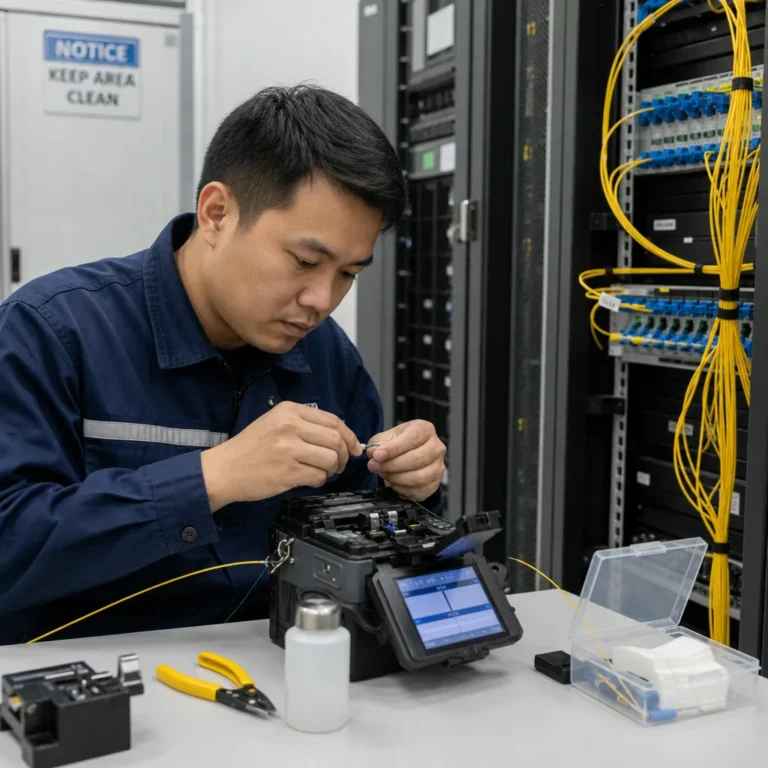
A professional Fiber Optic Deployment should also cover routing, termination, patch panels, testing, labeling, and cable management.
Fiber Ethernet for Enterprise Networks
Enterprise networks often combine copper and fiber.
Copper can serve endpoint devices, while fiber forms the backbone between network closets, floors, buildings, and core switches. This gives the backbone greater reach and bandwidth without replacing copper where it still works well.
For larger projects, fiber cabling should be planned as part of the complete Network Infrastructure, including switches, racks, pathways, patch panels, and future expansion.
Common Fiber Connectors
LC is popular in enterprise and data center networks because of its compact size. SC remains common in telecom and existing fiber systems.
MPO/MTP connectors combine multiple fibers into one interface, making them useful for high-density data center applications.
Choosing the Right Fiber
Start with your required speed and distance. Then confirm whether your equipment uses single-mode or multimode optics and identify the required connector type.
A fiber optic Ethernet cable is not necessary for every connection. Copper often makes sense for short endpoint runs. For long-distance links, high-speed backbones, EMI-sensitive environments, and scalable data center networks, fiber is often the better fit.
FAQs
Is fiber Ethernet faster than copper?
Fiber can support very high speeds and longer distances, but performance depends on the Ethernet standard, optics, cable type, and equipment.
Can fiber connect directly to an Ethernet switch?
Yes. A switch with compatible optical ports or transceivers can connect directly to fiber. Otherwise, you may need a media converter.
Is fiber Ethernet good for business networks?
Yes. Businesses commonly use it for enterprise backbones, data centers, building-to-building links, and connections requiring higher bandwidth or longer reach.
Need Fiber Products or Network Support?
Excellent IT Telecom Solutions provides fiber optic products and network infrastructure solutions for enterprise, telecom, and data center applications.
Explore our fiber optic products or contact our team to choose the right cabling solution for your network project.