
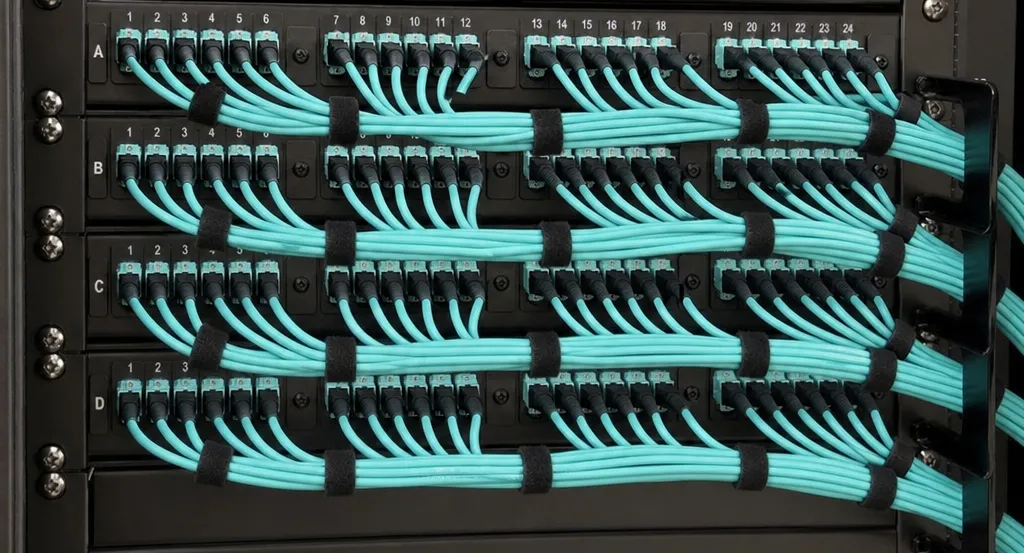
MTP vs MPO: What Is the Difference?
When planning a high-density fiber network, the choice between MTP and MPO connectors comes up in almost every project discussion. The two connector types look nearly identical and are used in many of the same applications: data centers, telecom rooms, enterprise backbones, and parallel optical links. Yet they are not the same thing, and understanding the relationship between them affects the decisions you make on fiber type, polarity, performance budget, and cost.
The short answer: MTP is a high-performance, branded version of an MPO connector. All MTP connectors are MPO-style connectors, but not all MPO connectors are MTP connectors. This guide explains what that means in practice and how to choose the right connector for your cabling system.
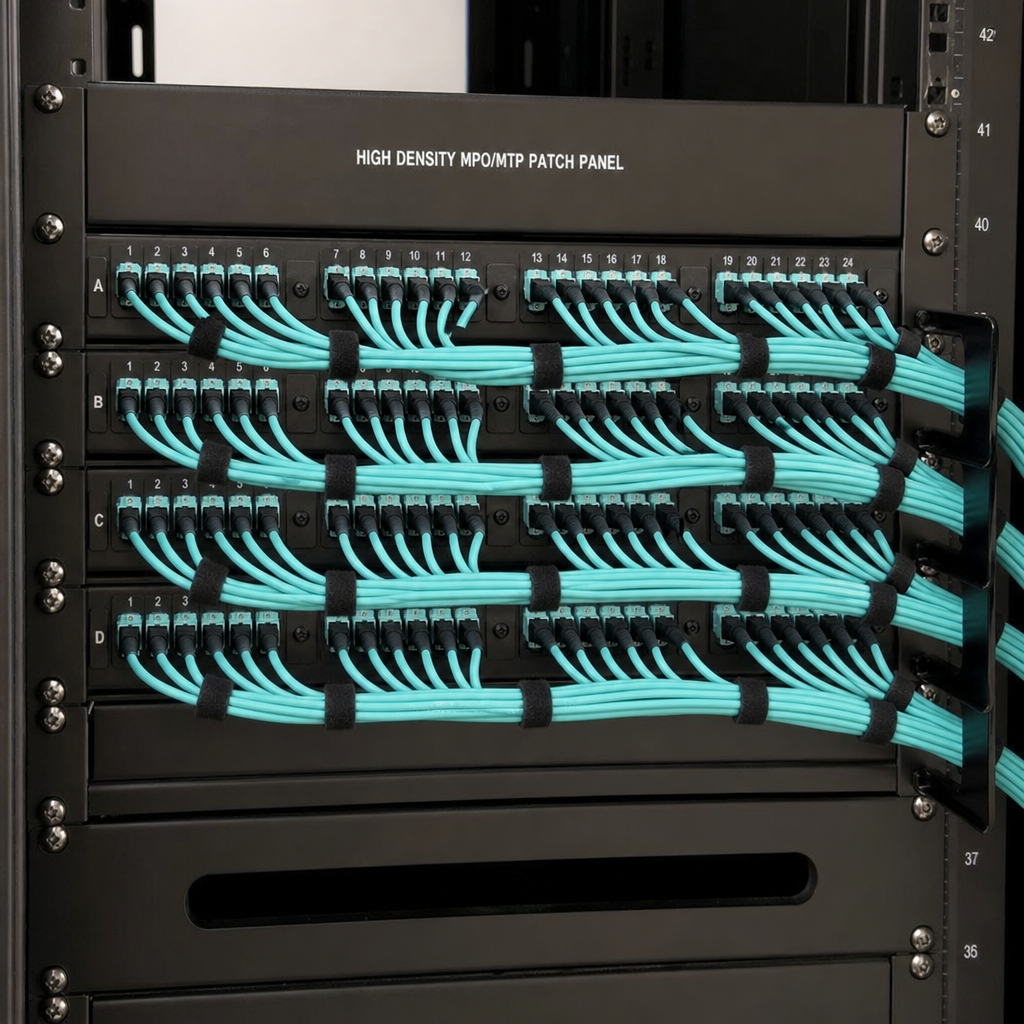
What Is an MPO Connector?
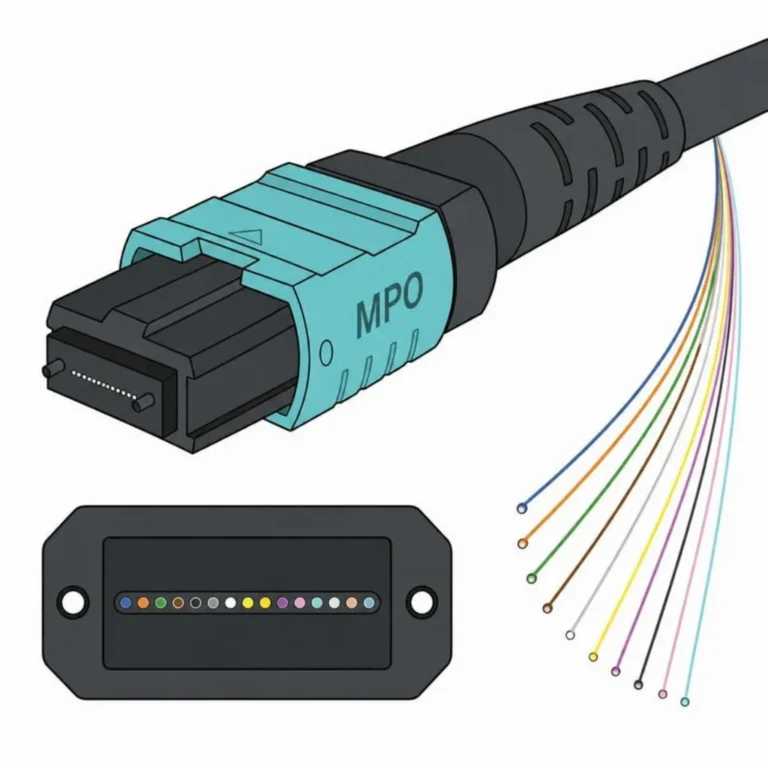
MPO stands for Multi-fiber Push-On. It is a fiber optic connector standard defined by IEC 61754-7 and TIA-604-5 that terminates multiple fibers in a single rectangular ferrule. Where a standard LC or SC connector holds one or two fibers, a single MPO connector can hold 8, 12, 16, 24, or more fibers depending on the ferrule design.
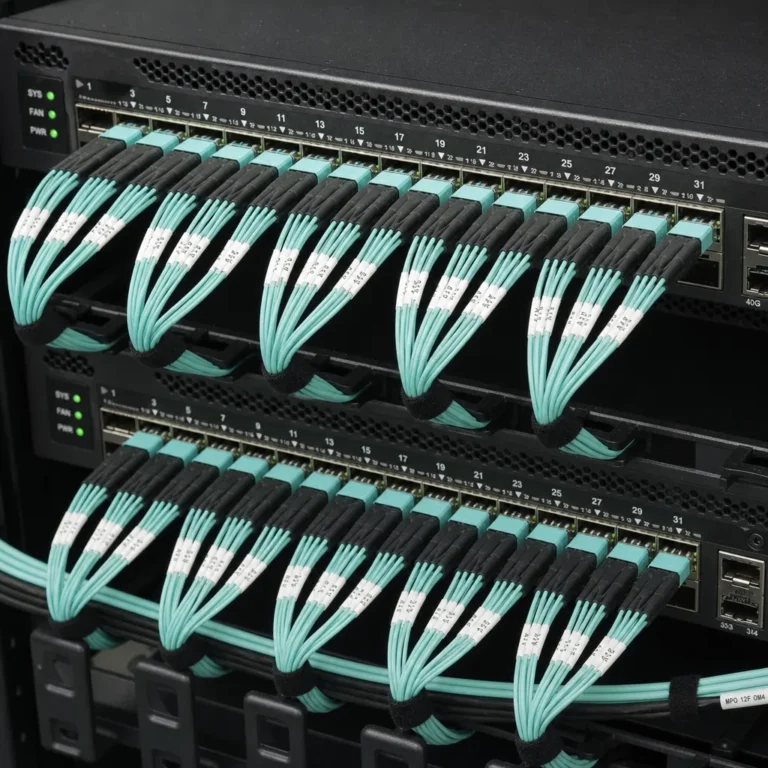
That fiber density is the core advantage of MPO connectors. One MPO connection can replace an entire bundle of individual LC or SC connections, which dramatically reduces cable congestion and speeds up installation in space-constrained environments.
MPO connectors are the standard interface for:
- Data center trunk cabling between switches, patch panels, and servers
- 40G, 100G, 200G, and 400G parallel optical links (which require 8 or more fibers per direction)
- Pre-terminated fiber assemblies and cassette-based cabling systems
- High-density patch panels in telecom rooms
MPO is the connector category. Different manufacturers produce MPO connectors at different quality levels, which is where MTP enters the picture.
What Is an MTP Connector?
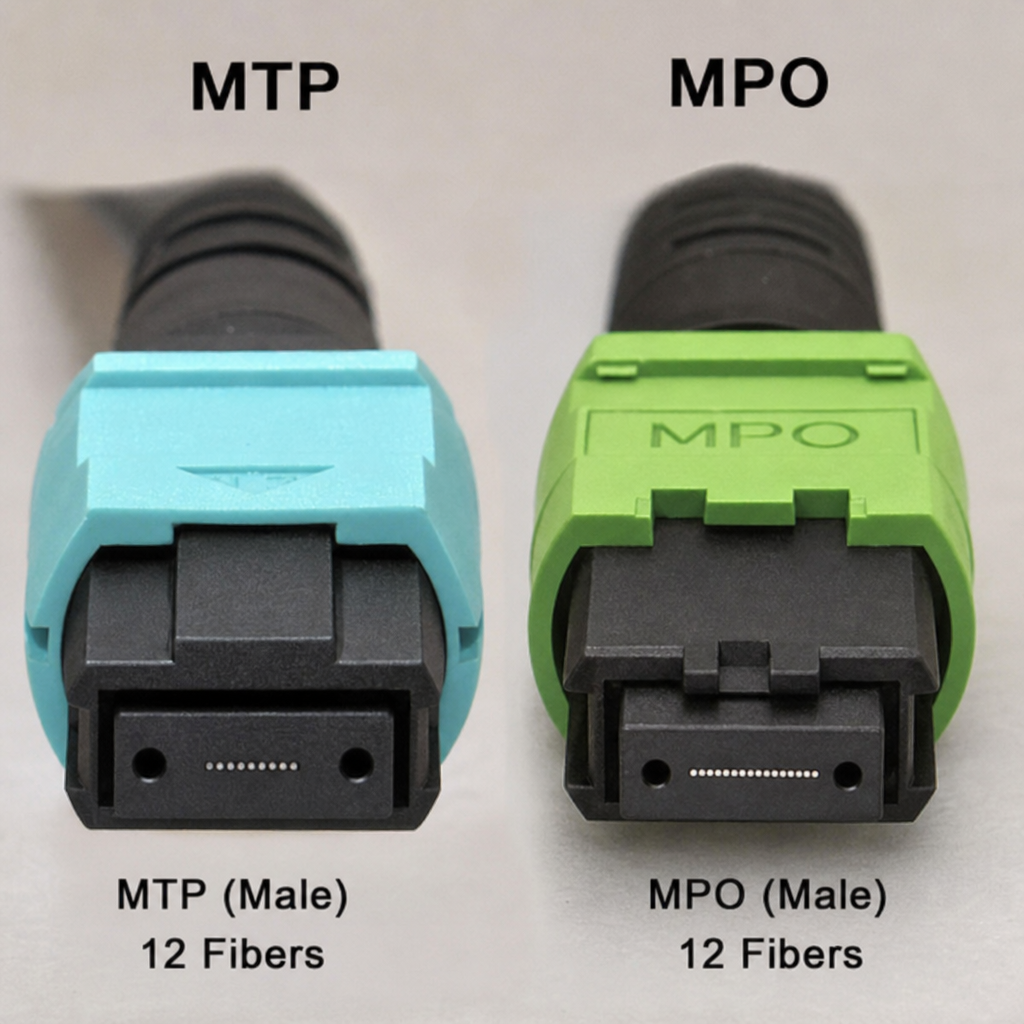
MTP is a registered trademark of US Conec Ltd. It is an enhanced MPO-style connector engineered to tighter mechanical tolerances than the base MPO standard. US Conec developed the MTP connector to address performance limitations in standard MPO designs, particularly in high-density environments where connectors are mated and unmated frequently.
MTP connectors use the same rectangular ferrule and push-pull latching mechanism as MPO connectors, so they are physically compatible with MPO adapters and patch panels. The differences are in the engineering details:
- Precision-machined ferrule with tighter fiber-hole tolerances for better fiber alignment
- Removable and reversible housing that allows polarity changes in the field without replacing the entire cable assembly
- Improved spring mechanism providing more consistent contact force across repeated mating cycles
- Better guide pin alignment, reducing insertion loss variation
- Available in low-loss (MTP Elite) configurations that meet stricter insertion loss specifications
These refinements matter most in high-speed data center links where optical power budgets are tight and connectors are handled often during moves, adds, and changes.
MTP vs MPO: Key Differences
1. Brand vs. Standard
MPO is an open connector standard. Any manufacturer can produce an MPO connector. MTP is US Conec’s trademarked product line built to exceed the base MPO standard. Think of it this way: MPO describes the connector format; MTP describes a premium implementation of that format.
2. Performance and Insertion Loss
Standard MPO connectors can perform well in many networks, but performance varies between manufacturers depending on ferrule quality, polishing method, and assembly standards. MTP connectors are engineered for more consistent optical performance. In networks with many connection points in series, even a 0.1 dB difference per connector adds up across the full optical channel.
3. Mechanical Design
The removable housing of MTP connectors is a significant practical advantage. Field technicians can change the polarity of an MTP assembly by removing the housing and rotating the ferrule, without replacing the cable. Standard MPO assemblies typically require a new cable to change polarity. For data centers that reconfigure often, this flexibility reduces operational cost over time.
4. Cost
MPO connectors cost less than MTP connectors. If the network has a forgiving optical loss budget and connectors are rarely remated, standard MPO assemblies are often the right economic choice. The higher cost of MTP is justified when the application requires lower insertion loss, higher connection repeatability, or the field-reversible housing feature.
5. Application Fit
| Use Case | MPO | MTP |
|---|---|---|
| General structured cabling | Good fit | Possible but higher cost |
| Cost-sensitive installations | Preferred | Not ideal |
| High-speed data center (40G/100G/400G) | Acceptable | Preferred |
| Frequent moves/adds/changes | Acceptable | Preferred (reversible housing) |
| Tight optical loss budget | Varies by manufacturer | MTP Elite recommended |
| Mission-critical infrastructure | Acceptable | Preferred |
Are MTP and MPO Connectors Compatible?
In most cases, yes. MTP and MPO connectors use the same physical interface, so an MTP connector mates with an MPO adapter, and an MPO connector mates with an MTP adapter. However, physical mating does not guarantee that the full optical channel meets spec.
Before mixing MTP and MPO components in the same link, verify:
- Fiber count: Both ends of the connection must have the same fiber count (12-fiber to 12-fiber, 24-fiber to 24-fiber, etc.)
- Fiber type: Single-mode (OS2) and multimode (OM3, OM4) are not interchangeable
- Gender: One side of a mated pair must be pinned (male) and the other unpinned (female). Mating two pinned connectors will cause mechanical damage.
- Polarity: The transmit fibers at one end must align with the receive fibers at the other. Polarity must be planned across the full channel before ordering assemblies.
- Insertion loss: Confirm the combined insertion loss of all connectors in the channel falls within the transceiver’s optical power budget.
Excellent IT Telecom Solutions supplies MPO and MTP fiber assemblies including trunk cables, breakout harnesses, and patch cables in 8-fiber, 12-fiber, and 24-fiber configurations for both OM3/OM4 multimode and OS2 single-mode. Our team in Irving, Texas can help you specify the right polarity, gender, and fiber count for your cabling design.
Polarity and Gender: What You Must Get Right
Polarity and gender are two of the most common sources of error in MPO/MTP cabling projects, and both are independent of the MTP vs MPO decision.
Gender
MPO and MTP connectors come in male (pinned) and female (unpinned) versions. The guide pins on a male connector insert into the guide holes on a female connector to align the fiber arrays. A mated pair must always be one male and one female. Two male connectors cannot be mated without a special pin-removal tool. Always confirm gender before ordering assemblies or adapters.
Polarity
In any duplex fiber link, transmit at one end must connect to receive at the other. With multi-fiber MPO/MTP connectors, managing this transmit-to-receive alignment across 8 or 12 fibers requires a polarity plan. TIA-568 defines three standard polarity methods:
- Method A (Straight): Trunk cables are straight-through; polarity is managed by the patch cords at each end.
- Method B (Crossover): The trunk cable itself reverses the fiber positions; patch cords are straight-through.
- Method C (Pair-reversed): Each adjacent fiber pair is swapped within the trunk; less commonly used.
Mixing polarity methods within the same channel is a frequent mistake that results in a link that is physically connected but non-functional. Decide on a polarity method before purchasing any cabling and stick to it across the entire project.
MPO/MTP Cable Assemblies: What to Check Before Buying
The connector name on the label is only one factor in assembly quality. A well-built cable depends on the full manufacturing and testing process. When evaluating MPO or MTP cable assemblies, confirm:
- Fiber type: OS2 (single-mode, yellow) or OM3/OM4 (multimode, aqua) matched to your transceivers
- Fiber count: Match the lane requirements of your optics (8-fiber for 40G QSFP+, 12-fiber for 100G QSFP28 PSM4, etc.)
- Polarity method: A, B, or C, confirmed against your full channel design
- Connector gender: Male (pinned) or female (unpinned) at each end
- End-face polish: UPC or APC as required by your transceivers
- Jacket rating: Plenum (OFNP), riser (OFNR), or low-smoke zero-halogen (LSZH) for the installation environment
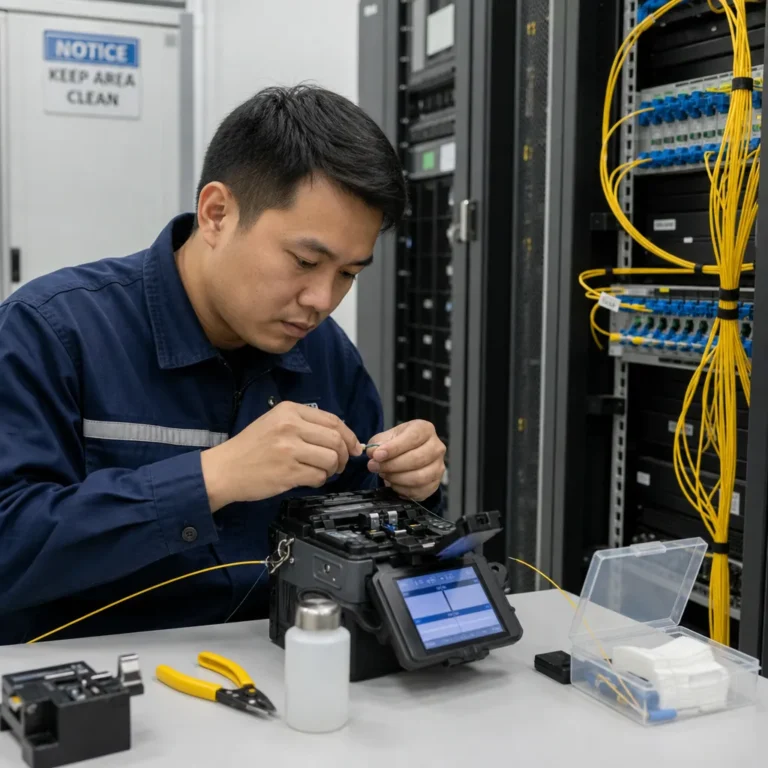
- Test documentation: Factory insertion loss test reports for every fiber in every connector
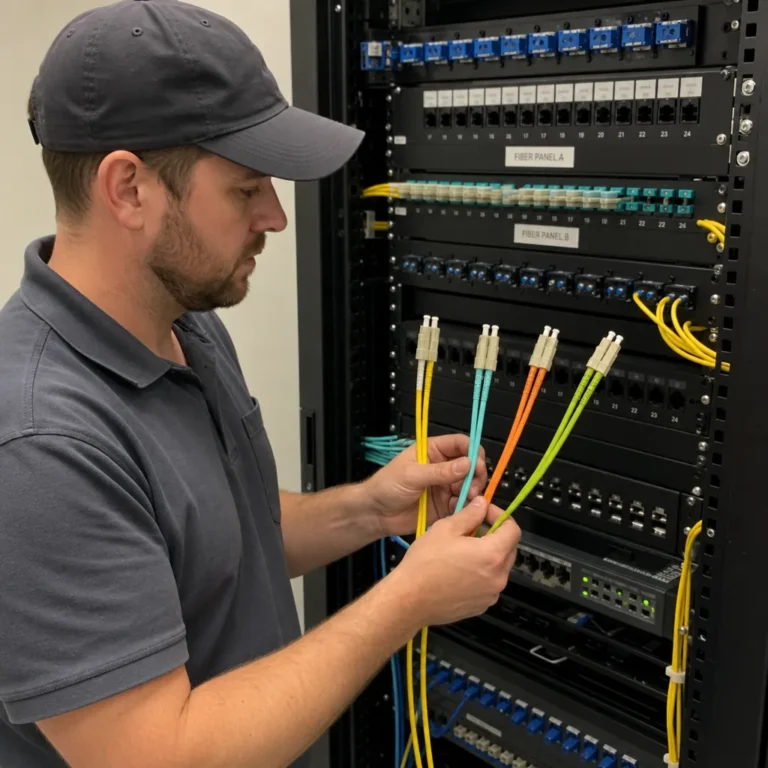
For breakout applications where the MPO/MTP trunk splits into individual LC or SC connectors at the equipment end, also verify the breakout length and connector type match your equipment port layout. EITS supplies MPO breakout cables in standard configurations for common data center switch and server deployments.
Common Mistakes to Avoid
- Mating two male (pinned) connectors, which damages the guide pins and fiber array
- Mixing polarity methods across different segments of the same channel
- Ordering the wrong fiber type for your transceivers (single-mode vs multimode)
- Ignoring insertion loss specs and then discovering the link fails the optical power budget after installation
- Skipping end-face inspection and cleaning before mating, which is the leading cause of signal loss in multi-fiber connectors
- Ordering today’s fiber count without accounting for near-future port growth
Multi-fiber connectors have many fiber end faces in one ferrule. Contamination affects multiple lanes simultaneously, so a single dirty connector can take down multiple 10G or 25G lanes at once. Always inspect with a fiber microscope and clean with an MPO-specific cleaning tool before every connection.
Which Should You Choose?
The right choice depends on your performance requirements, budget, and how often the cabling will be reconfigured:
Choose MPO when: the installation is relatively simple, the optical loss budget is not tight, cost efficiency is the primary driver, and connectors will rarely be remated.
Choose MTP when: the network operates at 40G or higher, the channel has multiple connection points, connectors will be handled frequently, the loss budget is tight, or you want the flexibility of field-reversible polarity without cable replacement.
For most high-performance data center deployments, MTP is the better long-term choice. For standard enterprise cabling where cost matters more than marginal performance differences, quality MPO assemblies from a reputable supplier deliver the required results at lower cost.
Conclusion
MTP and MPO connectors share the same physical interface, but MTP is a trademarked premium product engineered to tighter tolerances than the base MPO standard. Every MTP is an MPO, but not every MPO is an MTP. The decision between them is not about which is universally better; it is about matching the connector to the performance requirements, budget, and operational demands of the specific project.
For more background on fiber optic cable types, see our guide to single mode vs multimode fiber, or start with our beginner’s guide to fiber optic cables.
The EITS team in Irving, Texas can help you select the right MPO or MTP assemblies for your project, including trunk cables, breakout harnesses, patch cables, and cassette systems. We carry both multimode (OM3/OM4) and single-mode (OS2) configurations in a range of fiber counts and lengths.