
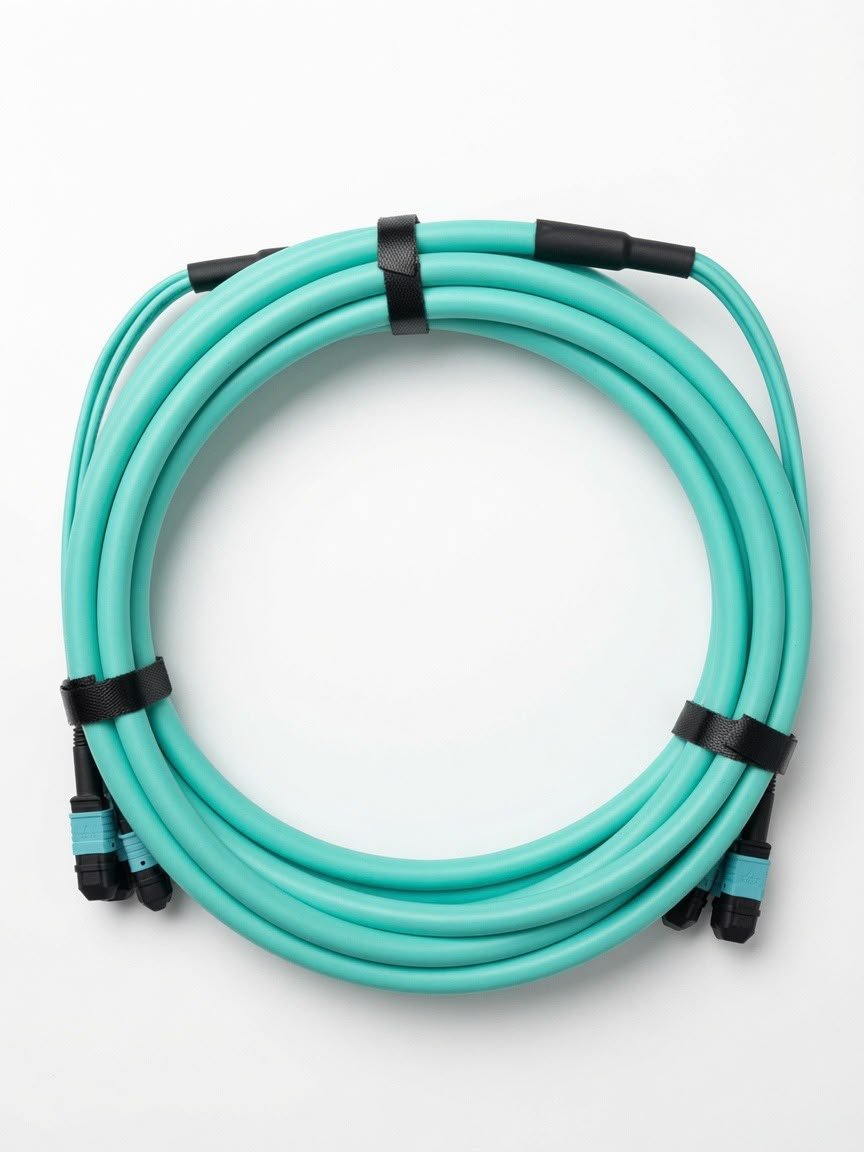
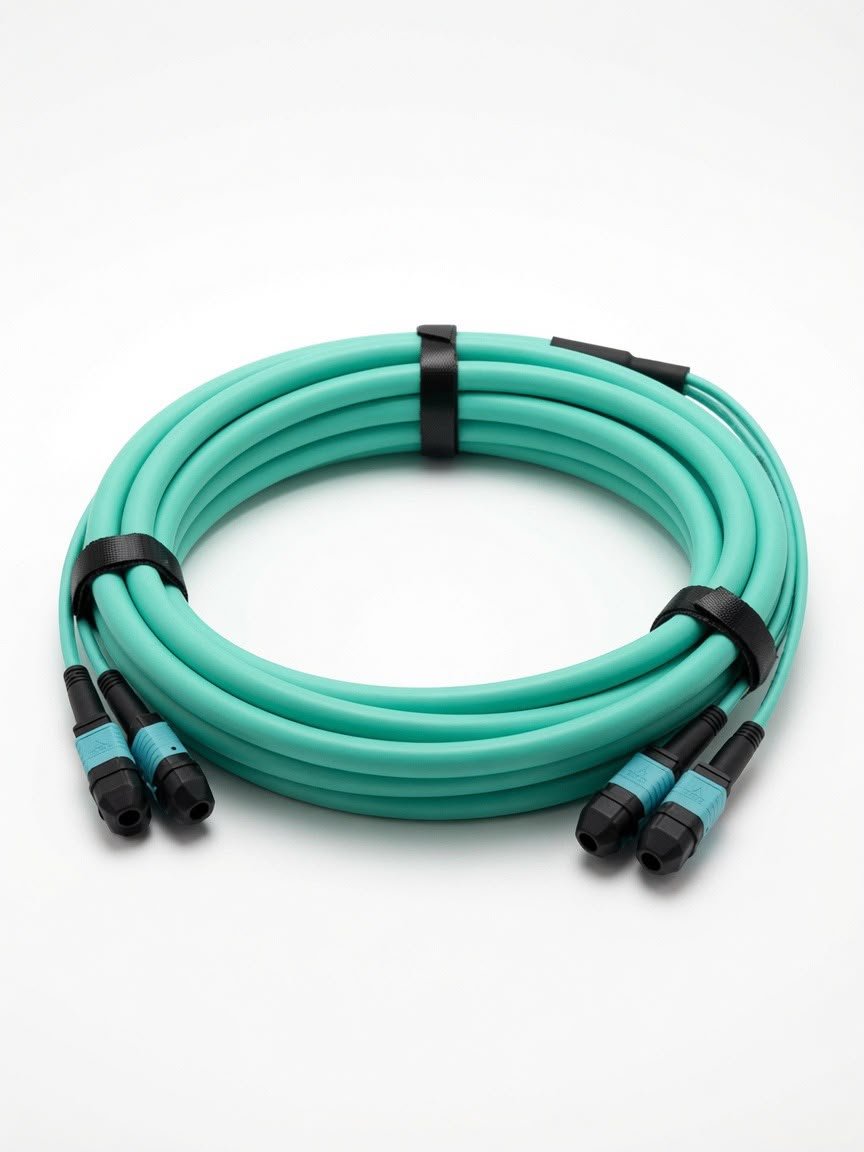
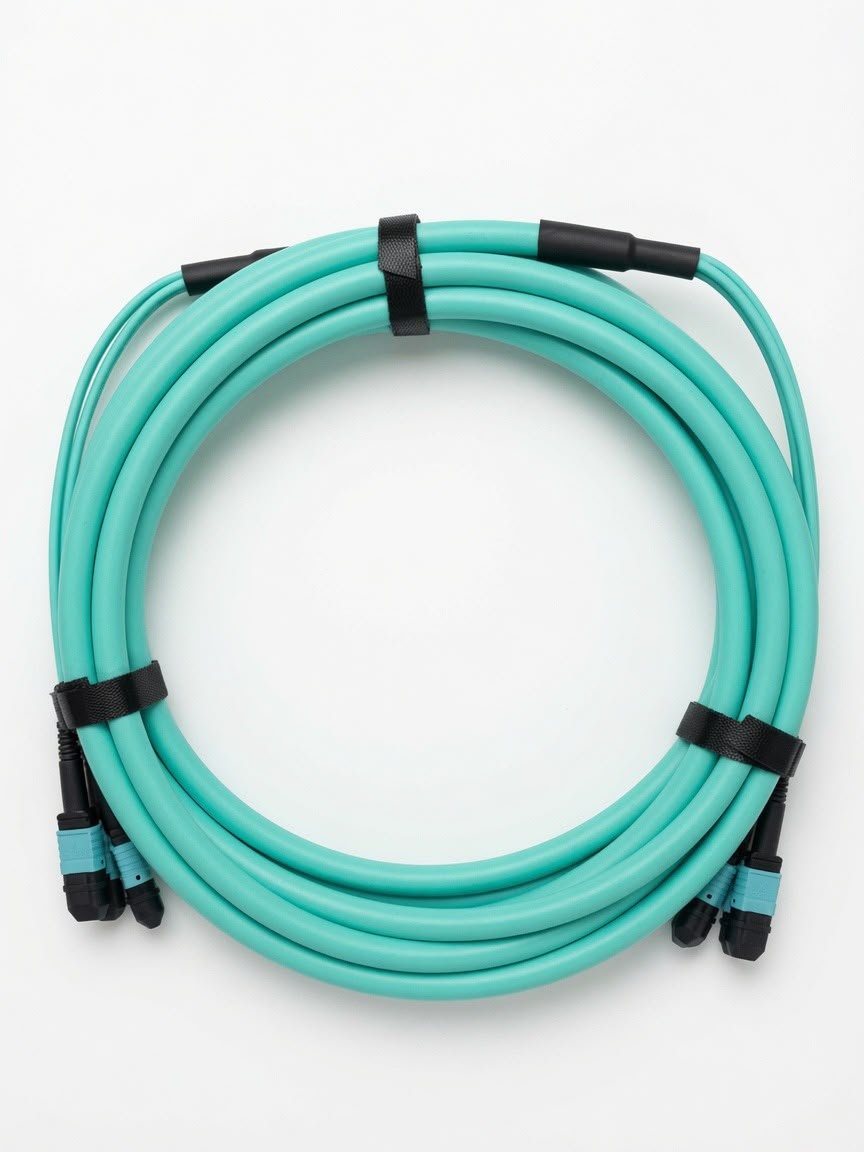
4MPO to 4MPO 48-Fiber OM3 Multimode Breakout Fiber Optic Cable | Female to Female | Factory Tested
$225.00 – $299.00Price range: $225.00 through $299.00
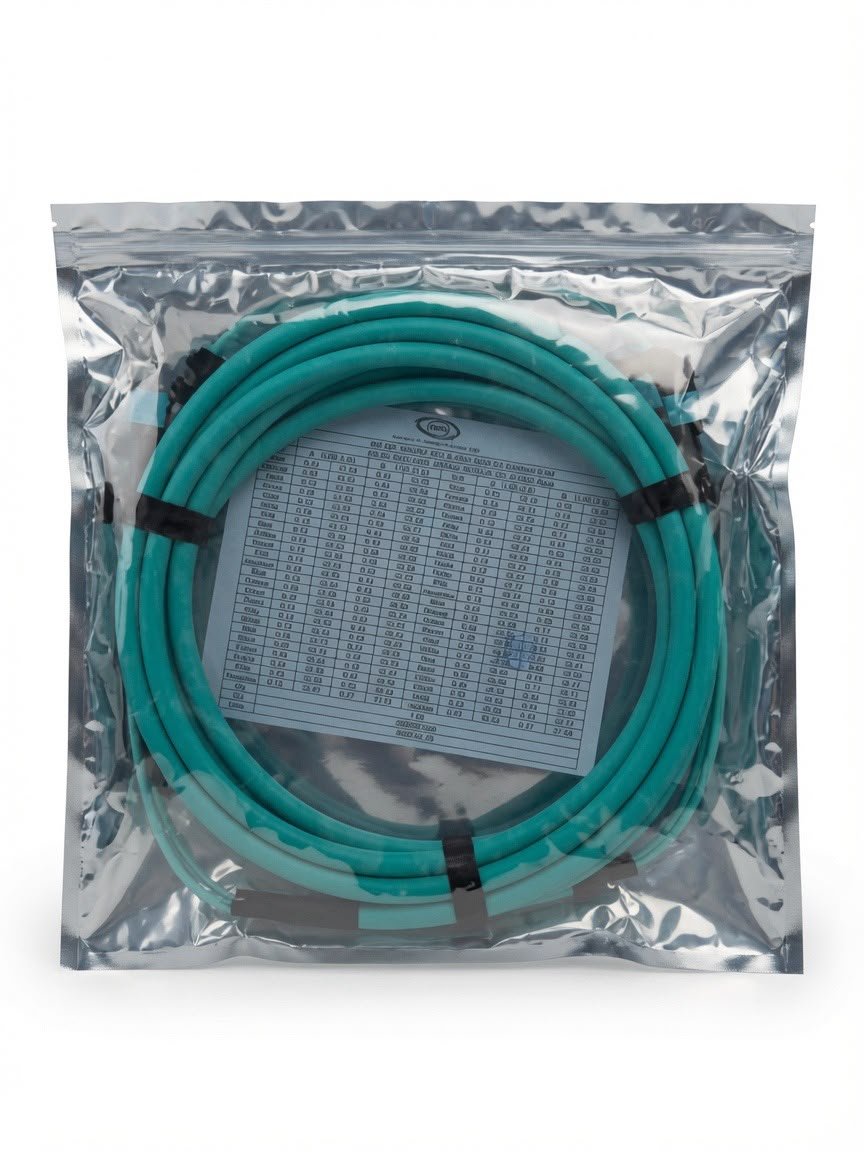
High-density 4MPO to 4MPO 48-fiber OM3 multimode breakout fiber optic cable with aqua jacket. Factory-terminated and individually tested. Full insertion loss and return loss test report included with every cable. Available in 3M and 5M with 0.2M breakout legs. Ready for 40G, 100G, and 400G data center deployments. Ships from Irving, Texas. Bulk pricing and custom configurations available.
About This Product
4MPO to 4MPO 48-Fiber OM3 Multimode Breakout Fiber Optic Cable
Excellent IT Telecom Solutions LLC supplies this MPO to MPO cable for high-density data center builds, enterprise backbone projects, and SAN environments. This MPO to MPO fiber optic breakout cable ships factory-terminated with four MPO female connectors on each end in a 4x12F configuration, carrying 48 fibers through a single flexible assembly.
The fiber is OM3 50/125um multimode with an aqua jacket, rated for 40G, 100G, and 400G transmission. It connects directly to QSFP+ and QSFP28 transceivers without any additional adapters or conversion hardware.
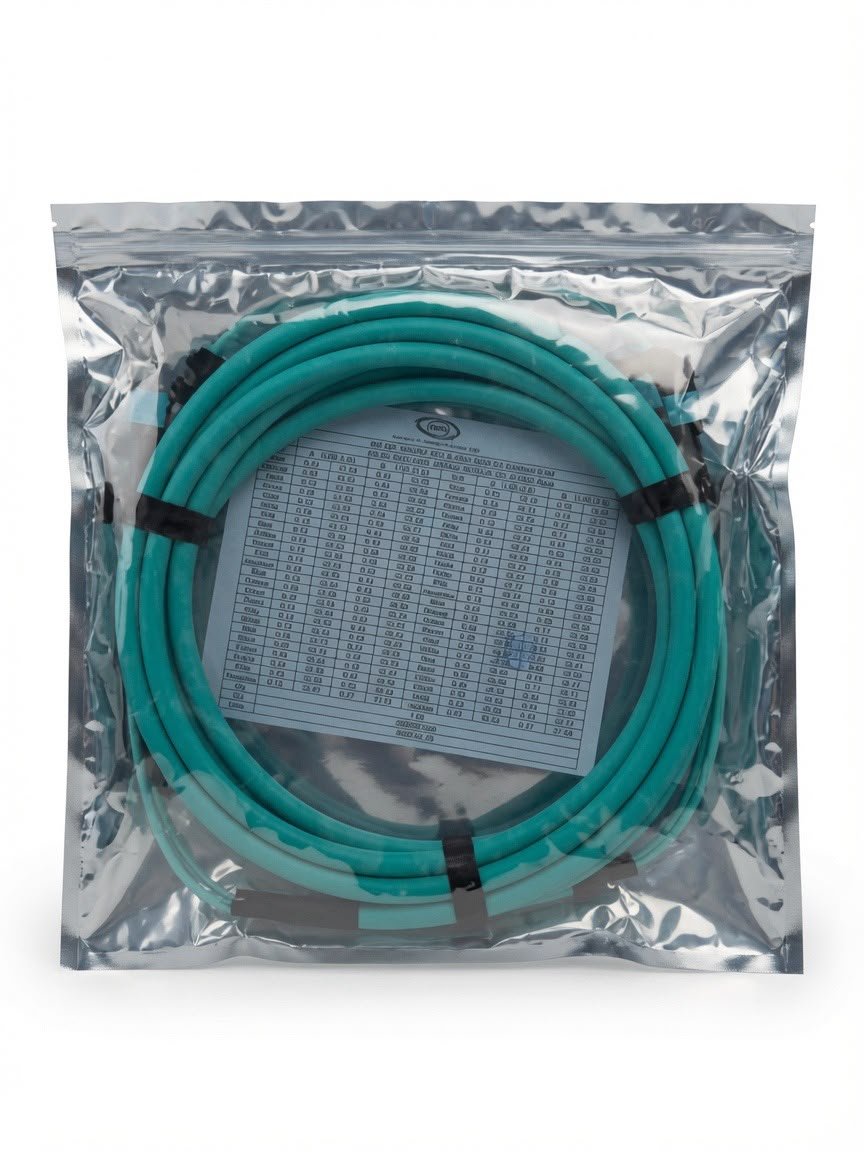
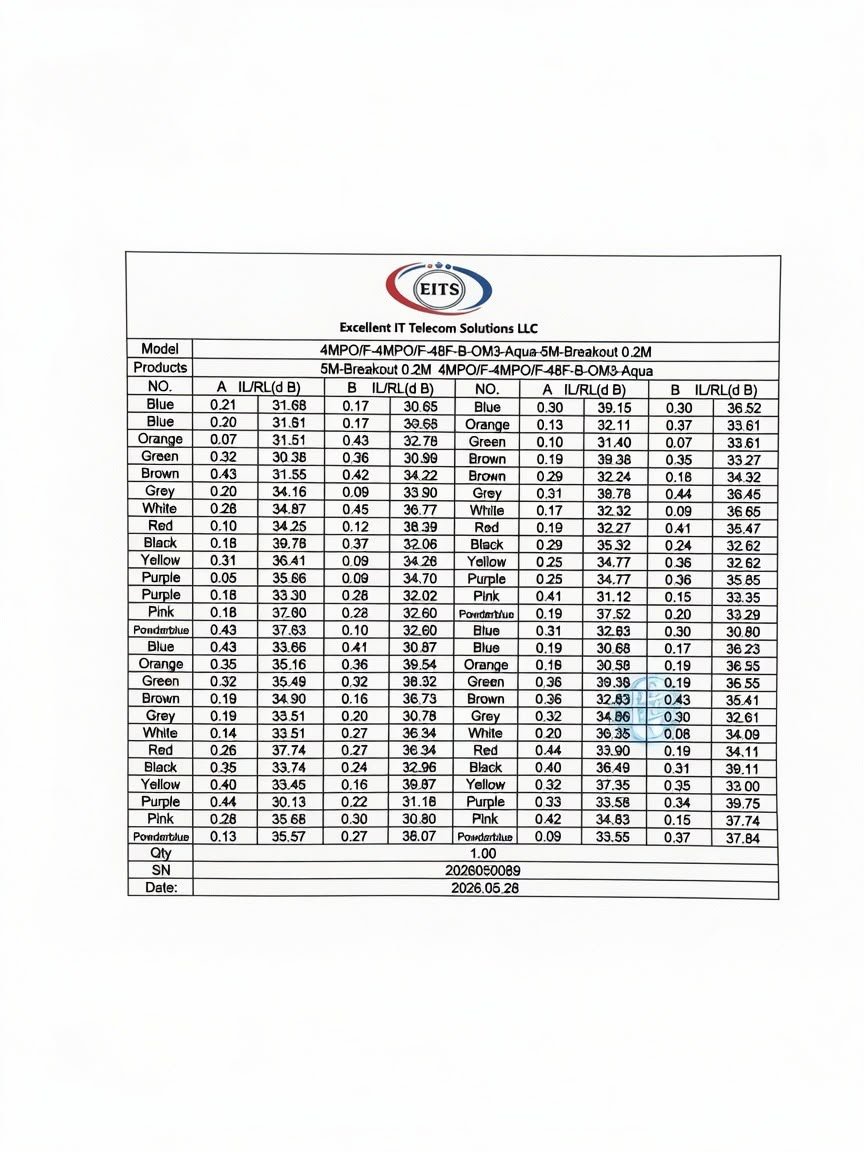
Every cable ships with its own factory-issued test report showing the insertion loss and return loss values for each individual fiber. You can verify the cable performance before installation rather than discovering issues after the rack is built.
Specifications
- Configuration: 4MPO Female to 4MPO Female, 48 fibers (4x12F)
- Fiber Type: OM3 50/125um Multimode
- Jacket Color: Aqua
- Breakout Legs: 0.2M on each end
- Available Lengths: 3M and 5M
- Supported Speeds: 40G, 100G, 400G
- Applications: Data center, SAN fabric, enterprise backbone, high-density patch panels, spine-leaf networks
What is Included
- MPO to MPO breakout cable with protective sleeving and strain relief
- Color-coded fibers for identification during installation
- Individual factory insertion loss and return loss test report
What is an MPO Breakout Cable and When Do You Need One
An MPO breakout cable, also called an MPO fanout cable, takes a multi-fiber MPO connector on each end and splits the fibers into separate breakout legs. Instead of running many individual fiber cables between switches, you run a single assembly that carries all the fibers together through the cable tray and only separates them close to the equipment.
This design keeps cable trays organized, reduces the number of individual runs to manage, and makes high-density ports practical without creating a mess of loose cables.
MPO vs MTP
MPO (Multi-fiber Push-On) is the connector standard defined by IEC 61754-7. MTP is a brand name from US Conec for their version of the MPO connector, which is manufactured to tighter tolerances and includes a few mechanical improvements over the basic MPO. Both are physically compatible and use the same housing, so an MPO cable works in an MTP adapter and the other way around. When people search for MTP cable or MTP breakout cable, they are looking for the same product. This cable functions as both an MPO breakout cable and an MTP breakout cable depending on which connector system your equipment uses.
OM3 vs OM4 for 40G and 100G
OM3 fiber supports 40G transmission up to 100 meters and 100G up to 70 meters using parallel optics. OM4 extends those distances to 150 meters at 40G and 100 meters at 100G. For most data center environments where switch-to-switch distances are under 30 meters, OM3 performs the same as OM4 at a lower cost. If your runs are longer or you are planning for 400G upgrades, OM4 is the better choice.
What is Insertion Loss
Insertion loss measures how much light signal is lost as it passes through a connector or splice point, expressed in decibels (dB). A lower number is better. Industry standards for MPO connectors typically require insertion loss below 0.5 dB per connection. The cables we supply are tested at the factory and the actual measured values are printed on the test report that ships with each cable, so you are not relying on a spec sheet average.
Shipping and Availability
These cables ship from Irving, Texas. Domestic orders typically arrive within 2 to 5 business days depending on destination. Bulk pricing is available for orders of 5 units or more. Custom lengths, fiber counts, and connector configurations are also available. Contact us with your project requirements and we will quote accordingly.
Need a Custom Configuration or Bulk Pricing?
We supply custom lengths, fiber counts, and configurations. Bulk pricing is available for orders of 5 units or more. Contact us with your project requirements and we will provide a quote.
Frequently Asked Questions
What is an MPO breakout cable?
An MPO breakout cable is a fiber optic assembly that uses MPO connectors on each end and separates into individual fiber legs near the equipment. Instead of running many loose cables through your cable tray, you run one organized assembly and fan it out at each end. It is the standard choice for high-density 40G, 100G, and 400G data center builds.
What is the full form of MPO cable?
MPO stands for Multi-fiber Push-On. It refers to a connector type that holds multiple fibers in a single housing, pushed together and locked with a push-pull latch. A single MPO connector commonly holds 8, 12, or 24 fibers. The 4MPO to 4MPO cable holds 12 fibers per connector, giving you 48 fibers total across the full assembly.
What is a breakout cable used for?
A breakout cable is used to connect high-density network equipment like top-of-rack switches, core routers, and storage arrays. It carries multiple fiber connections in one cable run and splits them out at each end so each fiber can connect to its own port. This reduces the number of individual cables in your cable tray, makes troubleshooting easier, and keeps your installation clean.
What does a breakout cable do?
A breakout cable takes a multi-fiber MPO connector and splits it into separate legs at each end. The main cable body carries all the fibers together through the run, and the breakout legs separate them close to the equipment so each fiber can reach its own port or adapter. It combines the organization of a trunk cable with the flexibility of individual connections at the endpoints.
What is the difference between MPO and MTP cables?
MPO is the international connector standard defined by IEC 61754-7. MTP is a brand name from US Conec that builds on the MPO standard with tighter manufacturing tolerances and some mechanical improvements. Both connectors are fully compatible with each other. Most buyers use the terms interchangeably when shopping for breakout or trunk cables.
What is the difference between LC and MPO cable?
An LC connector holds a single fiber and is the most common connector for individual patch cables. An MPO connector holds 12 or more fibers in one housing. For high-density parallel optic setups where you need to carry many fibers between two points in one cable, MPO is the right choice. Many data center builds use both: MPO trunk cables between switches and LC patch cables from the panel to the servers.
What is the difference between breakout cable and distribution cable?
A breakout cable gives each individual fiber its own sub-jacket inside the main cable, so the individual fiber legs can connect directly to equipment without needing a patch panel. A distribution cable groups the fibers under a shared outer jacket without individual sub-jackets, so the fibers need to be terminated in a protected enclosure. Breakout cables cost more but save time on installation.
What is a fanout cable?
A fanout cable is another name for a breakout cable. Both terms describe the same product: a fiber optic assembly that takes multiple fibers from an MPO connector and fans them out into separate legs at each end.
What is the advantage of a breakout cable over a distribution cable?
The main advantage is that breakout cables connect directly to equipment without going through a patch panel or termination enclosure. Each fiber has its own protective sub-jacket, strong enough to be plugged in on its own. For installations where direct connectivity and faster deployment matter, breakout cables are the better option.
What is a Cisco breakout cable?
A Cisco breakout cable refers to a cable used with Cisco switches that splits a high-speed port into multiple lower-speed ports. For example, a single 40G QSFP+ port can be broken out into four separate 10G SFP+ connections. The MPO connector on the switch side carries all four lanes, and the breakout legs connect to four individual 10G devices.
What are the two types of fiber optic cable?
The two main types are single-mode and multimode fiber. Single-mode has a very narrow core and carries light over very long distances. Multimode has a wider core and is used over shorter distances at lower cost. The MPO cables we supply use OM3 multimode fiber, the standard choice for data center runs up to 100 meters at 40G and 70 meters at 100G.
What is insertion loss and why should I check the test report?
Insertion loss is the amount of light signal lost as it passes through a connector, measured in decibels. Lower values mean better performance. The industry standard for MPO connectors is below 0.5 dB per connection. Every cable we supply ships with an individual test report showing the measured values for every fiber.
Do you offer custom MPO breakout cable configurations?
Yes. In addition to the standard 3M and 5M cables listed here, we can supply custom lengths, different fiber counts, and alternative configurations. Bulk pricing is available for orders of 5 units or more. Contact us with your project requirements and we will provide a quote.
What is the difference between an MPO patch cable and an MPO breakout cable?
An MPO patch cable connects two MPO ports directly, keeping all fibers bundled in one cable from end to end. An MPO breakout cable, also called an MPO fanout cable, also uses MPO connectors but splits the fibers into separate legs near each end so they can connect to individual ports or devices. If you need to extend an MPO link between two panels or switches, a patch cable is the right choice. If you need to distribute the individual fibers to separate ports or transceivers, a breakout cable is what you need.