
Fiber Optic Deployment Services
Expert Fiber Optic Installation, Splicing, Testing & Certification
Excellent IT Telecom Solutions provides fiber optic deployment services in Irving, TX and across the Dallas-Fort Worth area for data centers, enterprises, and telecom providers. Our certified technicians handle single-mode backbone installations, high-density MPO/MTP systems for 40G/100G networks, fusion splicing, and full OTDR testing and certification. We supply MPO Trunk Cables, MTP® Trunk Cables, and MPO Breakout Cables directly from stock, paired with our Data Center Installation and Network Infrastructure services for complete end-to-end fiber solutions across Irving, TX and the DFW area.
Complete Fiber Optic Solutions
Fiber optic infrastructure is the backbone of modern networks, carrying data at speeds and distances that copper cannot match. Whether you’re deploying single-mode fiber for long-distance campus connections, multimode fiber for data center networks, or high-density MPO/MTP systems for 40G/100G applications, proper installation is critical for reliable performance.
As a fiber optic contractor serving Irving, TX, Dallas, and the surrounding DFW area, we handle projects of all sizes, from single-office upgrades to large enterprise campus deployments. We work with all fiber types including OS2 single-mode, OM3 multimode, and OM4 multimode, using both traditional LC/SC connectors and high-density MPO/MTP technology.
Fiber installations require clean connectors, proper bend radius management, and the right technique for each fiber type. Our team follows proven cable handling procedures on every job. After installation, we run insertion loss and OTDR tests on each link and provide full documentation so your team has everything needed for future troubleshooting.
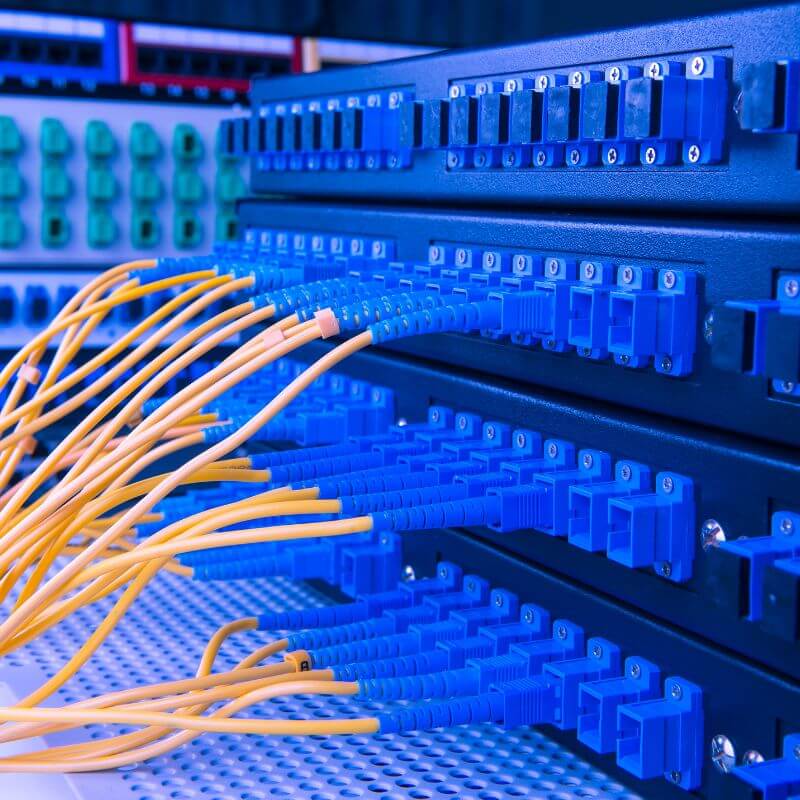
Fiber Optic Deployment Services We Provide

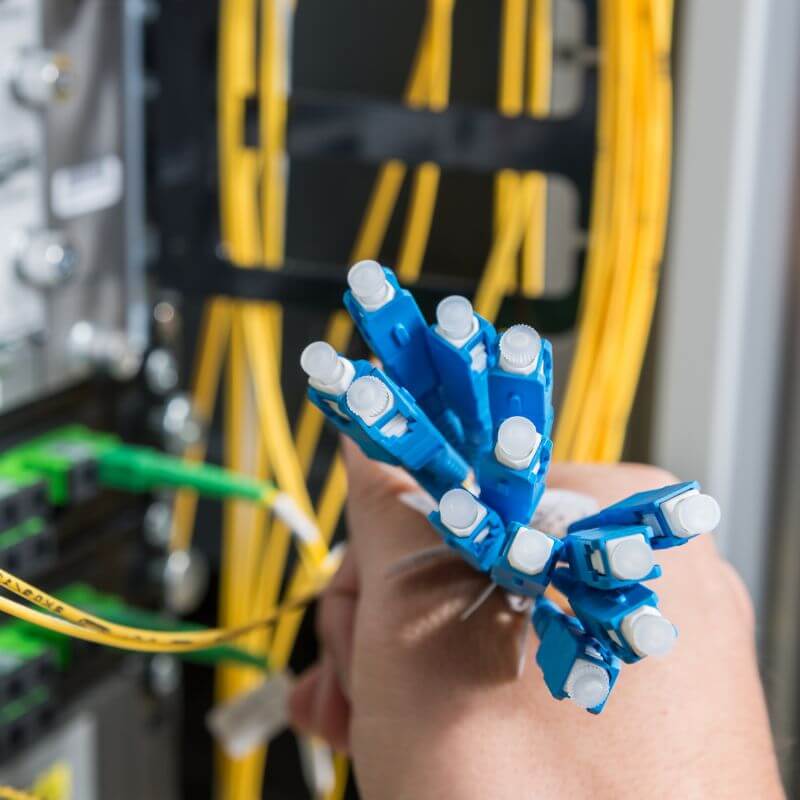
Single-Mode Fiber Installation
Long-distance fiber deployments using OS2 9/125μm single-mode fiber. Ideal for campus backbones, building-to-building connections, and applications requiring distances beyond multimode capabilities.
Key Features:
- Campus backbone networks (up to 40km+)
- Building-to-building connections
- Metropolitan area networks
- Long-distance data center interconnects
- 10G/40G/100G long-reach applications
- OTDR testing and certification
Performance: ✓ Distances up to 40km+ ✓ Supports all Ethernet speeds (1G to 400G) ✓ Future-proof bandwidth capacity
Multimode Fiber Installation
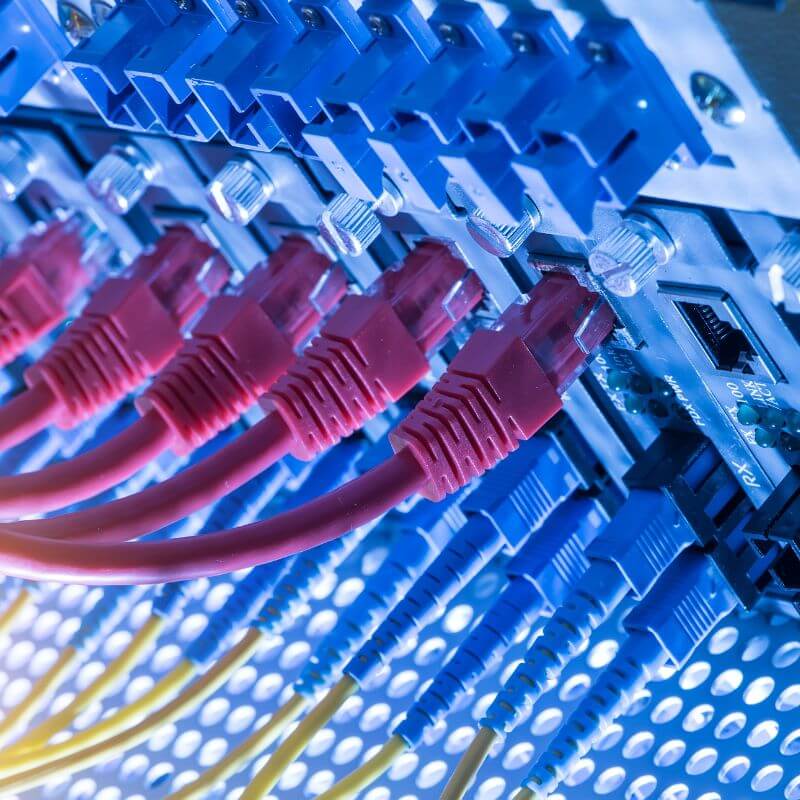
High-bandwidth multimode fiber for data center and enterprise applications. We install both OM3 and OM4 fiber optimized for 850nm VCSEL-based transceivers.
OM3 Fiber (50/125μm):
- 10GBASE-SR: Up to 300m
- 40GBASE-SR4: Up to 100m
- Aqua jacket color (standard)
- Cost-effective for 10G applications
OM4 Fiber (50/125μm):
- 10GBASE-SR: Up to 400m
- 40GBASE-SR4: Up to 150m
- 100GBASE-SR4: Up to 150m
- Magenta jacket (standard)
MPO/MTP High-Density Systems
Specialized installation of high-density MPO/MTP trunk cable systems supporting 40G and 100G parallel optics. These systems provide efficient connectivity with reduced cable counts.
System Components:
- 12-fiber and 24-fiber trunk cables
- MPO cassettes and modules
- Fiber adapter panels
- Type A, B, and C polarity options
Key Benefits:
- 6x density increase over duplex LC
- Reduced cable congestion
- Faster deployment time
- Support for 40G/100G networks
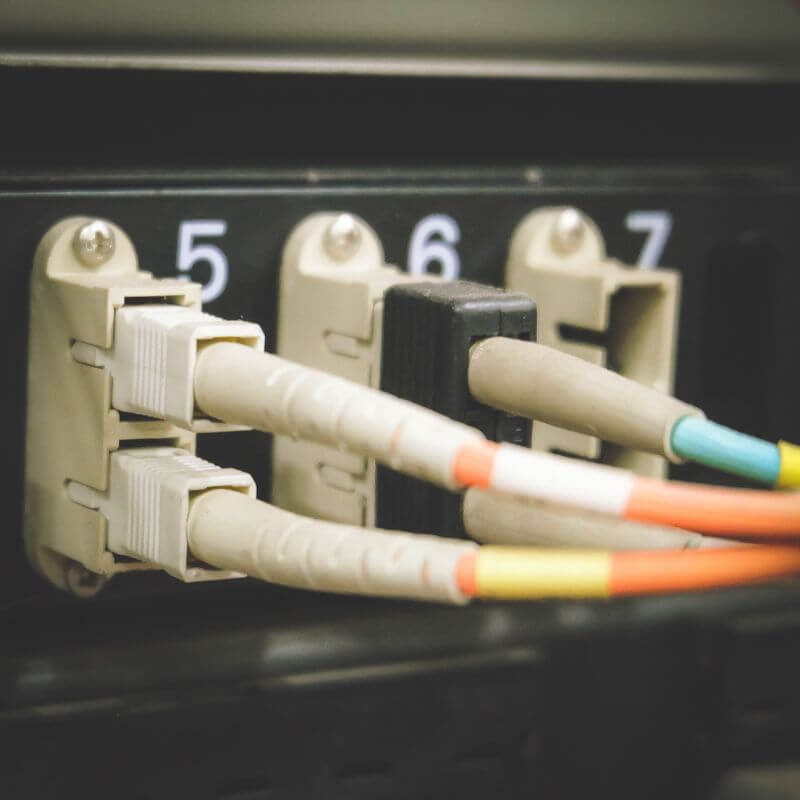
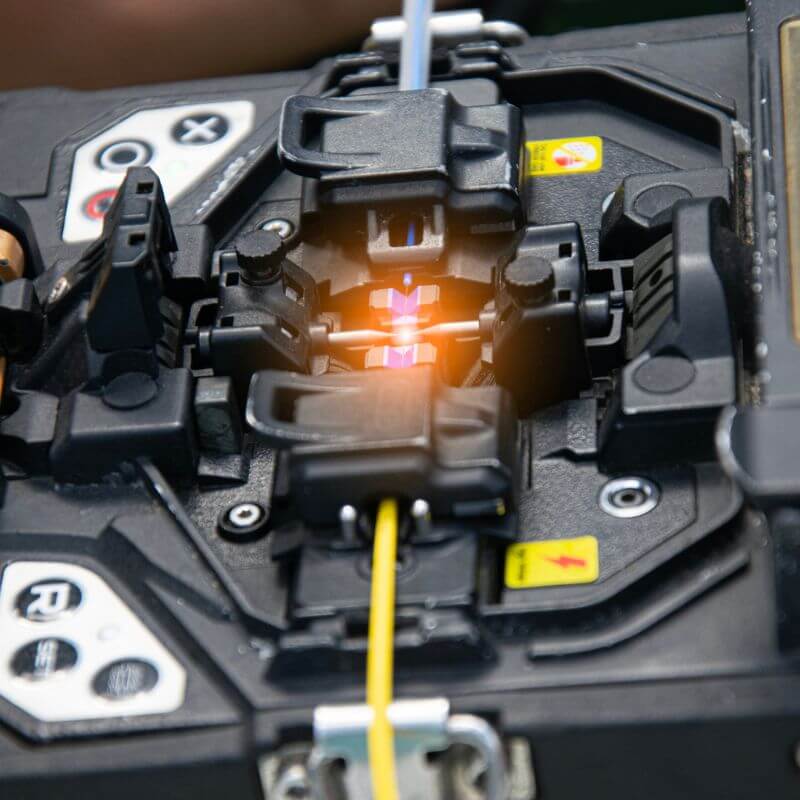
Fusion Splicing Services
Professional fusion splicing for permanent, low-loss fiber connections. Our certified splicers use advanced equipment to create reliable connections with minimal insertion loss.
Fusion Splicing Services:
- Single-mode and multimode splicing
- Indoor and outdoor applications
- Splice enclosure installation
- Mass fusion splicing (12-fiber ribbon)
- Emergency repair splicing
Splice Performance:
- Typical splice loss: <0.05dB
- Heat-shrink protection sleeves
- Multiple enclosure options
Fiber Testing & Certification
Comprehensive testing ensures your fiber infrastructure performs to specification. We use professional test equipment calibrated to NIST-traceable standards.
Testing Services:
Tier 1 Testing:
- Insertion loss testing
- Visual fault location
- End-face inspection
- Pass/fail certification
Tier 2 Testing:
- OTDR testing (both directions)
- Event identification and analysis
- Loss budget verification
- Comprehensive reports with traces
OTDR Testing & Troubleshooting
Advanced optical time-domain reflectometer testing for backbone fiber installations. OTDR provides detailed analysis including event location, loss characteristics, and reflectance measurements.
OTDR Services:
- Bi-directional OTDR testing
- Event analysis and characterization
- Splice loss verification
- Fiber break location
- Loss budget analysis
Troubleshooting:
- Fiber fault location
- High-loss connection diagnosis
- Intermittent link troubleshooting
Our Fiber Deployment Process
We follow a proven 4-step methodology ensuring quality fiber installations.
📋 1. Planning & Design
We start with comprehensive site surveys and pathway analysis. Our team designs fiber routes, calculates loss budgets, and specifies appropriate fiber types. You receive detailed proposals with routing plans and specifications.
Key Activities:
- Site survey and pathway assessment
- Loss budget calculation
- Route planning and design drawings
- Equipment specifications
- Detailed proposal and timeline
🔧 2. Professional Installation
Our certified fiber technicians install cables following industry best practices. We maintain proper bend radius, use appropriate pulling techniques, and protect fibers through all transitions. All terminations are performed in controlled conditions.
Key Activities:
- Fiber cable pulling and routing
- Splice enclosure installation
- Fusion splicing or termination
- Cable management and protection
- Pathway compliance verification
✓ 3. Testing & Certification
Every fiber link undergoes comprehensive testing using professional equipment. We perform insertion loss testing, OTDR analysis, and end-face inspection to verify performance. All results are documented with detailed reports.
Key Activities:
- Insertion loss testing (all links)
- OTDR testing and trace analysis
- End-face inspection and cleaning
- Polarity verification
- Performance certification reports
📄 4. Documentation & Handover
We provide complete documentation including as-built drawings, fiber assignments, and test results with OTDR traces. Our team conducts a thorough walkthrough explaining the installation and providing maintenance training.
Key Activities:
- As-built fiber route drawings
- Complete test reports with traces
- Fiber strand mapping and labeling
- Installation walkthrough
- Final acceptance and warranty
Why Choose Excellent IT Telecom Solutions
Certified Fiber Technicians
Our technicians hold FOA certifications and manufacturer-specific training. Years of experience ensure quality results regardless of project complexity.
Professional Test Equipment
We use tier-certified testers, multi-wavelength OTDRs, and high-magnification inspection scopes. All equipment is regularly calibrated to NIST-traceable standards.
All Fiber Types & Applications
From single-mode telecommunications to high-density OM4 data center systems, we handle all fiber types and applications with expertise.
Quality Materials
We use premium fiber optic cables from Corning, US Conec, and Senko. Our cables feature elite-grade connectors and bend-insensitive fiber.
Complete Documentation
Professional documentation included with every deployment. As-built drawings, test reports, OTDR traces, and fiber assignments provided.
Flexible Scheduling
We accommodate evening, weekend, and holiday schedules to minimize disruption. Our team works efficiently within your constraints.
Fiber Optic Solutions We Deploy
OS2 Single-Mode
Specifications:
- Core/Cladding: 9/125μm
- Jacket Color: Yellow
- Wavelengths: 1310nm, 1550nm
- Attenuation: ≤0.4dB/km
Distance Capabilities:
- 10GBASE-LR: Up to 10km
- 40GBASE-LR4: Up to 10km
- 100GBASE-LR4: Up to 10km
- Extended: 40km+ possible
Applications: ✓ Campus backbone networks ✓ Building-to-building links ✓ Metropolitan area networks ✓ Data center interconnect
OM3 Multimode
Specifications:
- Core/Cladding: 50/125μm
- Jacket Color: Aqua
- Wavelength: 850nm
- Bandwidth: 2000 MHz·km
Distance Capabilities:
- 1GBASE-SX: Up to 550m
- 10GBASE-SR: Up to 300m
- 40GBASE-SR4: Up to 100m
Applications: ✓ 10G data center networks ✓ Enterprise horizontal cabling ✓ Storage area networks ✓ Cost-effective short-reach
OM4 Multimode
Specifications:
- Core/Cladding: 50/125μm
- Jacket Color: Magenta
- Wavelength: 850nm
- Bandwidth: 4700 MHz·km
Distance Capabilities:
- 10GBASE-SR: Up to 400m
- 40GBASE-SR4: Up to 150m
- 100GBASE-SR4: Up to 150m
Applications: ✓ 40G/100G data centers ✓ High-performance computing ✓ Spine-leaf architectures ✓ Next-generation networks
Ready to Deploy Fiber Optic Infrastructure?
Whether you need a fiber installation contractor in Irving, TX or Dallas, or you’re upgrading to 40G/100G with high-density MPO/MTP systems, we can help. Get in touch to talk through your project and we’ll put together a detailed proposal.
FREQUENTLY ASKED QUESTIONS
What's the difference between single-mode and multimode fiber?
Single-mode fiber (OS2 9/125μm) uses laser sources for long distances (10km+). Multimode fiber (OM3/OM4 50/125μm) uses LED or VCSEL sources for shorter distances (up to 150-400m). Single-mode is used for campus backbones and long-distance connections, while multimode is common in data centers where distances are shorter. Single-mode offers unlimited bandwidth over distance but costs more for transceivers, while multimode is more cost-effective for short reaches.
How do you ensure proper polarity for MPO/MTP systems?
We carefully plan polarity during design (Type A, B, or C) based on your equipment and architecture. During installation, we verify polarity through visual inspection of key-up/key-down orientation and fiber position. After installation, we conduct polarity testing using test equipment or live transceivers to confirm transmit and receive paths are correctly matched. We document polarity configuration for future reference and troubleshooting.
What testing is included with fiber installations?
All fiber installations include Tier 1 insertion loss testing using calibrated light sources and power meters. For backbone installations, we provide Tier 2 OTDR testing in both directions with full trace analysis. Testing includes end-face inspection using fiber microscopes to verify cleanliness and proper geometry. We document all test results with pass/fail criteria based on TIA-568-C standards. Test reports include individual link results, OTDR traces where applicable, and certification statements.
Can you install fiber in existing conduits?
Yes, we frequently install fiber in existing conduit systems. Our process includes inspecting conduits for damage or blockages, calculating pulling tensions to avoid exceeding fiber specifications, using appropriate lubrication, and employing proper pulling techniques. We can also install innerduct within existing conduits for better fiber protection. If conduits are damaged or blocked, we identify issues and recommend solutions before installation.
Do you provide fiber repair services?
Yes, we provide emergency and scheduled fiber repair services including locating fiber breaks using OTDR equipment, splice repairs for damaged cables, connector replacement, and restoration of service. Our repair services include same fiber performance as original installation with complete testing and documentation. Emergency response is available for critical infrastructure failures with 24/7 support for existing customers.
How long do fiber optic installations last?
Properly installed fiber optic infrastructure can last 20-30+ years. Fiber itself doesn’t degrade over time—problems typically result from physical damage, improper installation, or environmental factors. Our installations use quality materials, follow proper handling procedures, and include appropriate protection to ensure maximum longevity. Regular inspection and cleaning of connectors helps maintain optimal performance throughout the fiber’s operational life.